The short answer
In the US and Canada, a resume is a short, tailored summary of your work (usually 1 to 2 pages) and a CV is a long, complete academic or medical record. In the UK, Ireland and most of Europe, “CV” simply means what Americans call a resume, while India, the Middle East and Australia use both words loosely. Match the local term, length and personal details norms, and keep a separate long-form CV only if you apply for academic, research or medical roles.
01The core difference between a resume and a CV
In the strict, North American sense, the two documents do different jobs. A resume is a marketing document: a short, selective summary of the experience most relevant to one role. A CV (curriculum vitae, Latin for “course of life”) is a record: a complete history of your academic and professional work that grows over your career and is rarely trimmed.
| Resume (North American sense) | CV (academic sense) | |
|---|---|---|
| Purpose | Win an interview for a specific role | Document your full academic or clinical record |
| Length | 1 page early career, 2 pages for most experienced people | As long as it needs to be, often several pages |
| Content | Selected experience, impact, skills | Everything: education, research, publications, grants, teaching, service |
| Tailoring | Rewritten or reordered for each application | Mostly stable; updated as you add work |
| Typical use | Most private and public sector jobs | Academia, research, medicine, some fellowships and grants |
The confusion starts because outside North America, the word “CV” is used for the short, tailored document too. So the real question is rarely “resume or CV?” It is “what does an employer in this country expect, and how long should it be?”
02Resume vs CV by region
These are general norms for non-academic roles. Individual employers, industries and multinational companies vary, so the job ad and the company's own careers page always win.
| Region | Usual term | Typical length | What to know |
|---|---|---|---|
| US and Canada | Resume (CV only for academia, medicine, research) | 1 to 2 pages | Tailored and achievement-led. Personal details beyond contact information are left out. In Quebec, French-language applications are common. |
| UK and Ireland | CV | Usually 2 pages | A UK “CV” is essentially a US resume, just often a little longer. Academic CVs are a separate, longer document. |
| European Union | CV | 1 to 2 pages is common | Conventions differ by country. The EU's Europass CV format exists and is accepted widely, but many private employers prefer a clean, custom layout. |
| India | Resume and CV used interchangeably | 1 page for freshers, 2 for experienced | A personal details section is traditional; you may still see the older term “biodata”. Multinationals and startups increasingly expect a lean, international format. |
| Middle East (GCC) | CV | Often 2 to 3 pages | Many employers expect nationality, visa status and a photo. Notice period is often useful to include. |
| Australia and New Zealand | Resume or CV, used interchangeably | Often 2 to 3 pages | Slightly longer documents are normal. Referees are commonly listed or offered on request. |
03Photo and personal details norms
This is where the regional differences matter most, and where getting it wrong can look out of place. In some markets a photo and date of birth are expected; in others, employers would rather you leave them out because of anti-discrimination rules and practice.
| Region | Photo | Date of birth / age | Other personal details |
|---|---|---|---|
| US and Canada | No | No | Leave out marital status, nationality and religion. Mention work authorisation only if it helps (for example, “Authorised to work in the US”). |
| UK and Ireland | No | No | Leave out marital status and nationality. A line on right to work is useful if you are applying from abroad. |
| European Union | Varies: still common in Germany, Austria and parts of central and southern Europe; less so in the Netherlands, Nordics and Ireland | Sometimes, increasingly optional | Follow the country and the employer. International companies usually prefer no photo. |
| India | Optional; common in some sectors, usually skipped for tech and multinationals | Traditionally included, now often optional | Languages known and notice period are useful; father's name and marital status are increasingly dropped. |
| Middle East (GCC) | Often expected | Often included | Nationality, visa status, notice period and driving licence are commonly listed. |
| Australia and New Zealand | No | No | Mention work rights or visa status if relevant. |
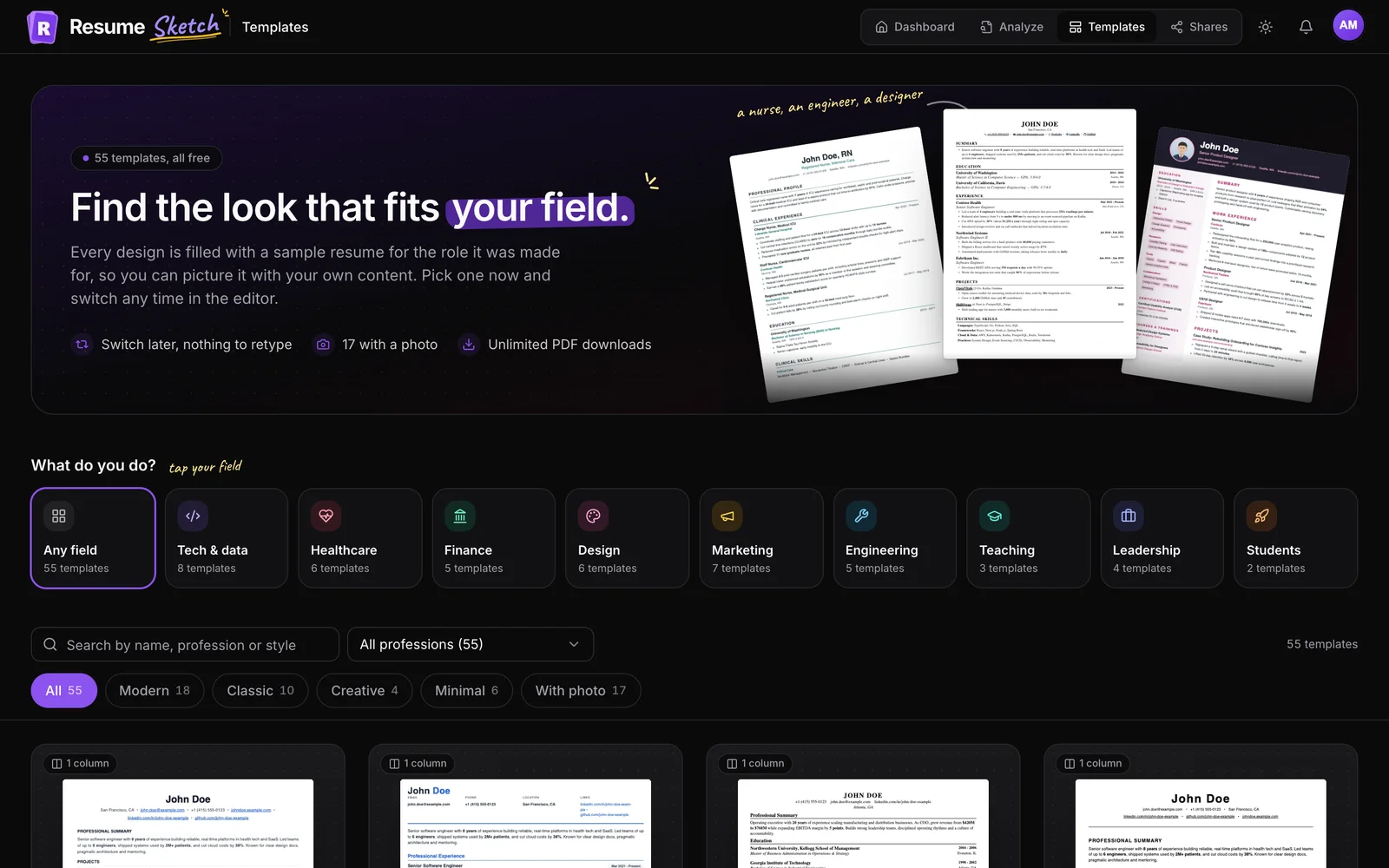
Resume Sketch supports both approaches. Photo templates such as Portrait Executive, Portrait Sidebar and Portrait Spotlight place a headshot in the header or sidebar, and the templates panel has a With photo filter. On those templates, a Show on resume switch lets you turn the photo on or off per resume. Your other resumes stay photo-free.
04What goes into an academic CV
An academic CV is the one case where “longer” is genuinely correct. Search committees want the full record, and gaps in it raise questions. A typical structure:
- Contact details and current position or affiliation.
- Education, including dissertation title and supervisor.
- Academic appointments and research positions.
- Publications, split into peer-reviewed articles, books and chapters, preprints and work under review, in a consistent citation style.
- Grants, fellowships and awards, with funder and amount where that is normal in your field.
- Conference presentations and invited talks.
- Teaching experience and supervision.
- Service: reviewing, committees, outreach.
- Skills such as methods, lab techniques, languages and software.
- References, usually three, if the call asks for them.
Medical CVs follow a similar idea, with registrations, clinical rotations, audits and quality improvement work in place of some research sections.
In Resume Sketch, the Scholar Academic and Research Lab templates are built for this kind of document, and Physician MD is designed for doctors and consultants. The add-section dialog includes Certifications, Licenses & Registrations, Languages, and Awards & Honors, plus a custom section you can title “Publications”, “Grants” or “Teaching” and give its own fields.
05Which one should you send?
A quick way to decide:
- Academic, research, medical or fellowship application anywhere: a full CV.
- Industry job in the US or Canada: a resume, 1 to 2 pages.
- Industry job in the UK, Ireland or Europe: a “CV” that is really a tailored resume, about 2 pages, following local photo norms.
- India: either word works; 1 page if you are a fresher, 2 if experienced; go lean for multinationals.
- Middle East: a CV of 2 to 3 pages, with the personal details the employer expects.
- Australia or New Zealand: a resume of 2 to 3 pages, with referees if requested.
Whatever you send, the fundamentals don't change: a clear layout that applicant tracking systems can read, a strong summary, and specific achievements. If you are unsure how yours parses, run it through the ATS resume analyzer, which you can try even without an account.
06How to keep both versions in Resume Sketch
The mistake most people make is maintaining two separate documents by hand. They drift apart, and every new role or publication has to be added twice. A better approach is to keep one master record and generate each version from it.
- 1
Put everything in your profile once
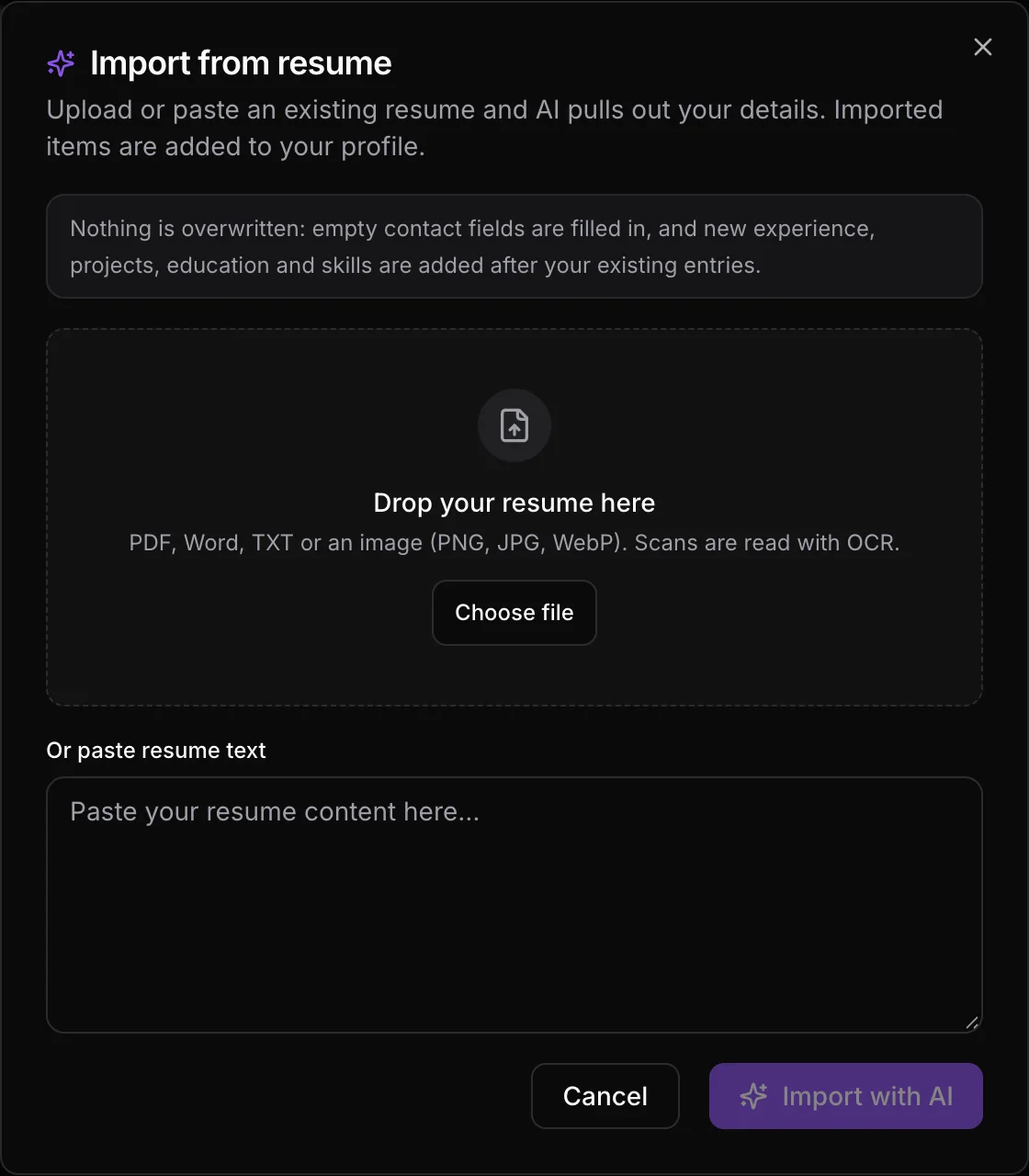
Your profile holds your full history: experience, projects, education, skills and extra sections. If you already have a CV, import it and the AI parses it into your profile so you don't have to retype it.
- 2
Create each version from your profile
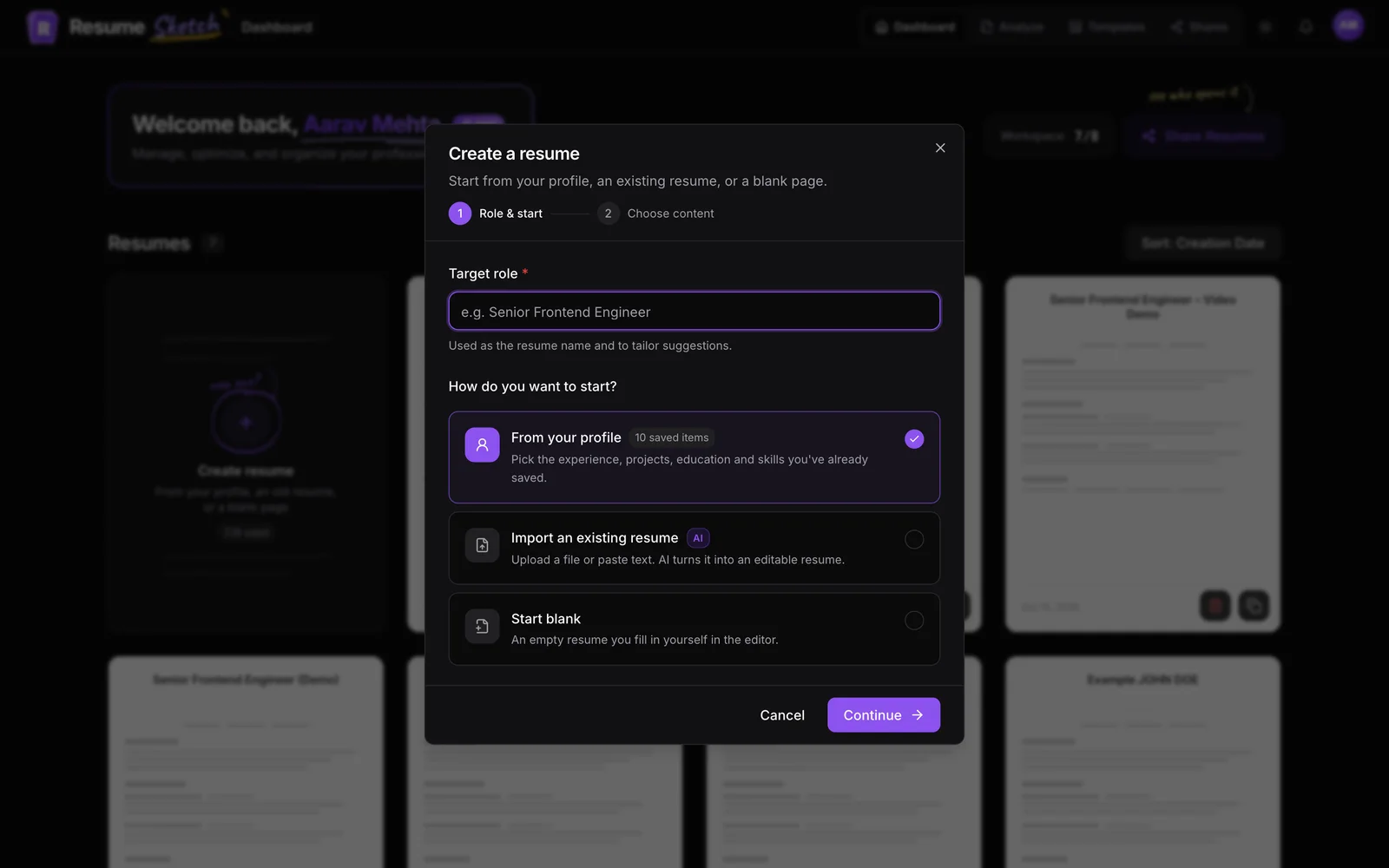
On the dashboard, click the Create resume card and choose From your profile. The target role you enter is also used as the resume name, so make it easy to tell versions apart. Then pick what to bring over: everything for the long CV, only the most relevant roles and projects for the short resume.
- 3
Or copy a version and adapt it
Each resume card on the dashboard has a copy button. Duplicate your UK CV, for example, then switch it to a photo template and add nationality and visa details for a Gulf application.
- 4
Adjust the layout per market
Pick a template per version, drag sections into the order that market expects, and add region-specific sections such as Languages or Licenses & Registrations.
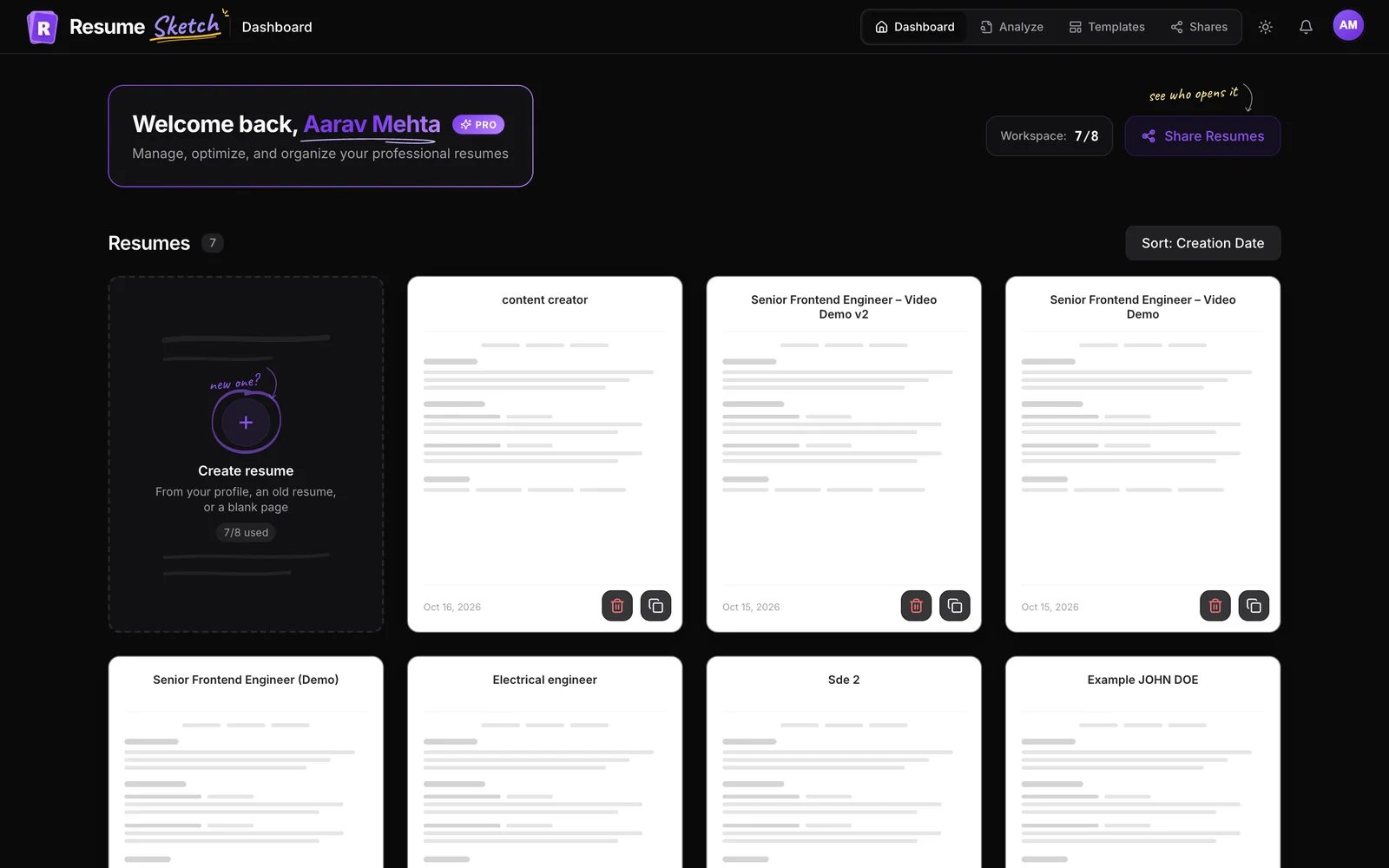
The free plan includes 2 resumes, which covers one resume and one CV. Pro allows 8 and Max 20, which helps if you apply across several countries or role types. See pricing for current details.
Frequently asked questions
Is a CV the same as a resume?
It depends on where you are. In the US and Canada, a CV is a long academic or medical record and a resume is a short, tailored document. In the UK, Ireland and most of Europe, “CV” is the everyday word for the short, tailored document. In India and Australia the words are often used interchangeably.
How long should a CV be in the UK?
For most non-academic jobs, about two pages. Very senior candidates sometimes go to three. Academic CVs are longer and have no fixed limit.
Should I put a photo on my CV?
In the US, Canada, the UK, Ireland and Australia, generally no. In parts of Europe and in much of the Middle East, a professional photo is still common or expected. If you can't tell, the safer choice for international employers is to leave it out.
Can I send my academic CV for an industry job?
It's better not to. Industry recruiters want a 1 to 2 page resume focused on outcomes and skills. Keep your academic CV for academic applications and create a shorter industry version from the same profile.
What is a Europass CV?
Europass is a standard CV format provided by the European Union. It is widely recognised, especially for public sector roles and cross-border applications, but many private employers are equally happy with a clean, well-structured CV in your own layout.